The Songwriter Speaks: Dylan Drummond of Alley Rat and Tula Vera
Interview by Bennett Kelly
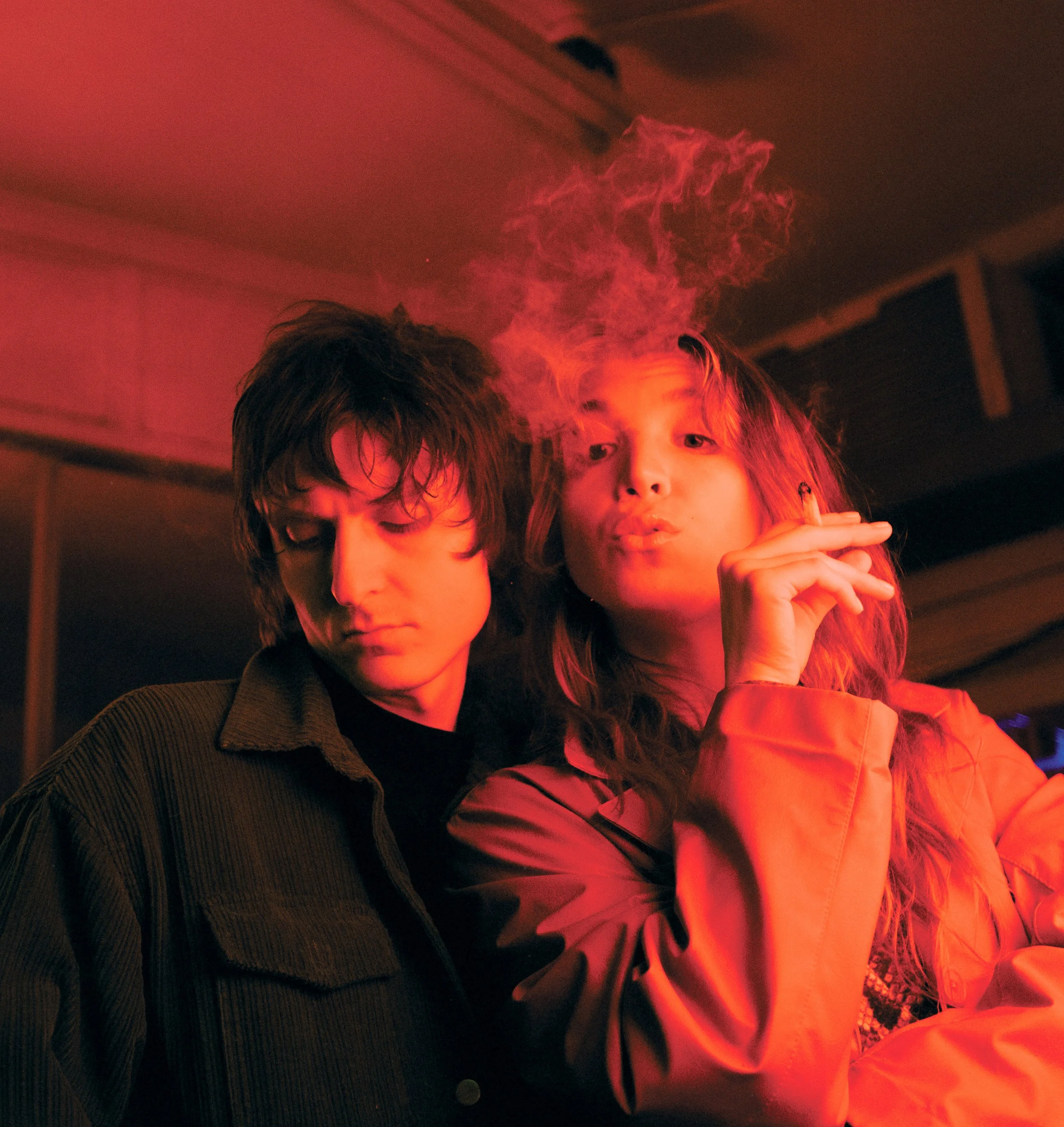
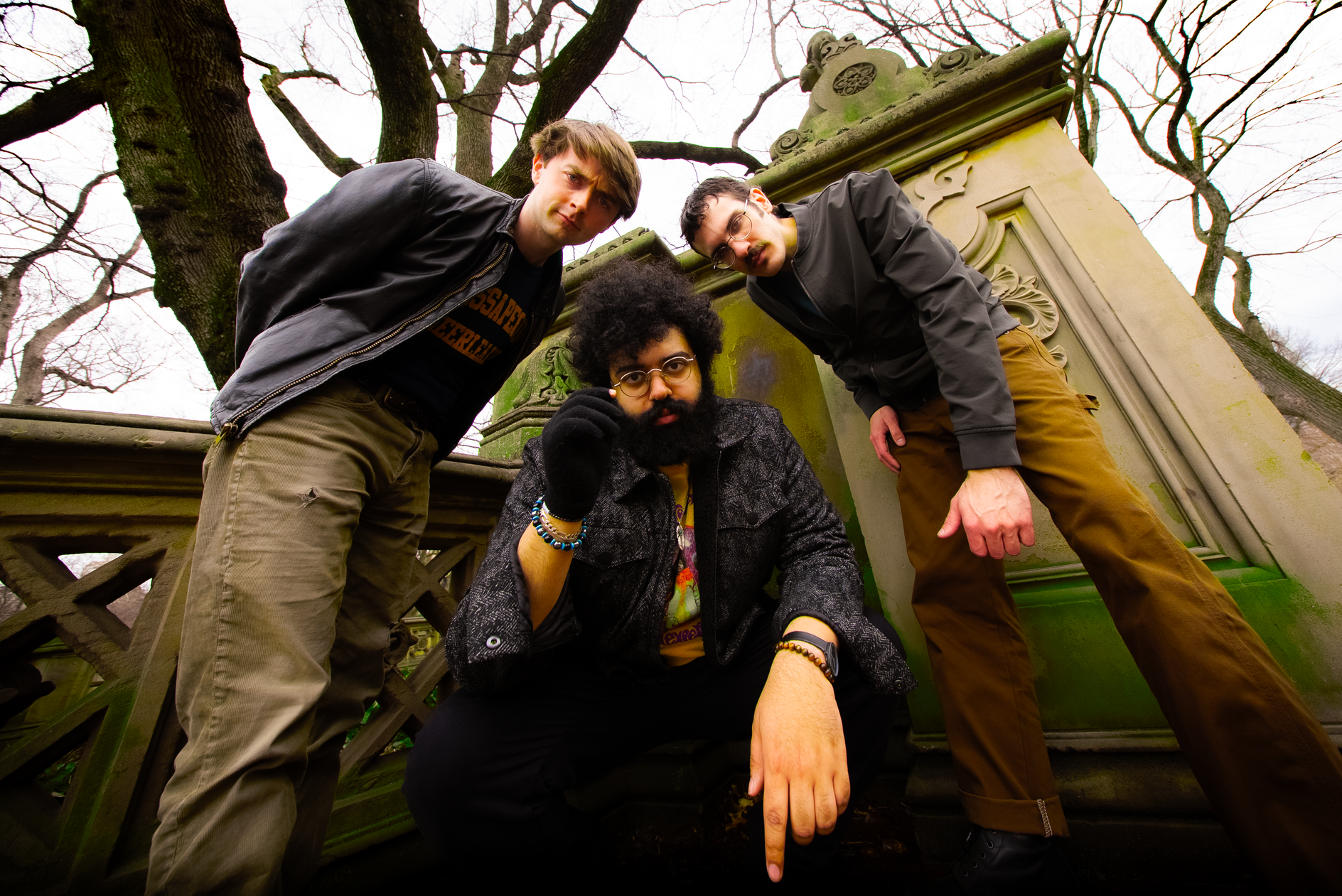
Alley Rat is a rock trio of college friends and current Jersey City roommates, Dylan Drummond, guitar and vocals, Joe Jansen, bass, and Joe McCaffrey, drums. With Tula Vera - of which Drummond and Jansen are half - catching its breath interim, Alley Rat re-emerges with its third full-length album, Beep Beep, Dolly!, released April 24. In this Songwriter Speaks interview #10, the day after their April 16 Pet Shop, Jersey City show, Drummond reflects on the distinctions between solo projects and the Tula catalogue, how to find a songwriting flow state, and the influence of Prince in writing direct and modern - and occasionally naughty - love songs.
Bennett Kelly: What was the first song that you ever wrote?
Dylan Drummond: Oh wow. Even when I was pretty little, I was singing to myself, and I have some memories of doing that. But until I started playing guitar, I guess I didn't formally write anything down, where I had any concern about keeping track of or remembering something. So to be honest, I don't really remember what the first song that I wrote is or was.
Or... Hold on. I remember when I was a kid in Toronto, standing in a family friend’s bathroom, and they had this big window, I remember distinctly singing about birds. And then years later in that same house, I ended up writing “Blue Skies.” I wrote a couple other songs in that house too. So that's kind of a cool connection, being there and writing at different points in my life. I'm Canadian, so maybe it's feeling comfortable and home with family, and that kind of thing, a sense of security.
BK: “Blue Skies” is the last track on the first Tula Vera album, which came out almost ten years ago. When you look back at those tracks, at that album, what do you think of it now?
Dylan Drummond: I hear… I felt so adult when I was writing those tunes, but now looking back, I feel like I was like such a kid. Probably 16, 17, 18, writing those songs. I was really just figuring it out. I've gone through different waves of being slightly, maybe embarrassed of my past, and then also being proud of it, and also feeling nostalgic about it, all different waves. I'm at the point where I look back and mostly just remember really fun memories, of hanging out in the studio, and hanging out with friends, being at the Meatlocker [Montclair NJ] way too late. Those first little tastes of performing my music. Because prior to that, it was always in a more academic sense, performing music that wasn't my own.
BK: This is your third Alley Rat album, plus you’ve had a bunch of singles. Do you have a different approach for Alley Rat records than with Tula Vera?
Dylan Drummond: Well, this record was one where it just kind of happened. Tula had a recording session that we ended up not being able to do. And so I knew Jansen was free. And I hit up Joe McCaffrey, who me and Jansen went to college with at Willie P. And I was like, Hey, we got this studio session for two days. It's already booked. Would you want to come out and just play some stuff? It really was not much time, a couple weeks beforehand.
It was up in Albany, recording with Joe Taurone [Tummy Rub Records]. The plan was we were gonna stay there for two days and just record. I didn't show anybody any songs beforehand. There were just things that I had sitting around for maybe a couple weeks, some of them, a couple months. And we did “Beep Beep, Dolly!,” “I Got No One,” and “To Go Missing.” And it just kind of flowed. It was just so easy and I was so happy with how the songs came out. Cause I didn't really have all these preconceptions and full vision of how it could or should be, or how everything exactly was gonna sound.
I kind of just had, you know, the chords and I think the last tune, “To Go Missing,” I think I had words for, but the other tunes I just kind of had melodies. And we did a couple takes of one, and it’s like, Okay, what's the next thing? And we started working on the next thing.
And we did that process a couple times where we go up there for two or three days, and hang out at the studio almost the entire time. I mean, go to sleep and there's some leisure time where we're watching YouTube and stuff like that. But we were just kind of in it, and it was nice being away from home. It’s not super far away, but it felt like I could escape a little bit and just focus in. And I think the guys liked it too, and it was fun, and we would just do it every two or three months, and now we have probably enough for another record.
But yeah, I've never done that before with Tula. I had done little things like this in the past in college, but not in the same way where we were going away. And I was so much younger then and I think there was a lot more pressure then. When I was younger, I gave the studios this like, intimidating thing where it's like, Okay, this is going to capture a forever-moment. And it's so much, you know, costs so much money and all. But this kind of released that pressure because there was no expectation other than just have fun playing together and making something. I loved it. I want to keep going up every couple months and doing it.
It kind of changed my whole perception of how a record should be recorded. Because in the past, with Tula, it was always like rehearse, rehearse, rehearse, play it live, get people's reactions, it was always about getting it up to par for the studio. As opposed to this where we just went into the studio directly. And it was something more like a flow state of like, just let it come out, as opposed to kind of a checklist of things to do.
BK: Several of these songs, “Beep Beep, Dolly!,” “Eyes Closed,” “Forget My Love,” they'll start one way where, it's maybe mellow, and then layers are added throughout, and it turns into a rocker, or breaks open into some chaos. When you're composing these songs, are you fusing multiple ideas into one, or are you taking the first element and seeing where the music takes you, where the flow state takes you?
Dylan Drummond: Hmm. I would say different from song to song. So “Beep Beep, Dolly!,” I think musically all those parts came as one idea. The only thing that came in the moment was bringing it to the band, furthering the arrangement. A little synth and acoustic guitar, layers to help it build and the way that maybe I wanted it to. But the lyrics came right in the studio. The first day we recorded all the basic tracks, and then the second day we did overdubs and vocals and stuff like that, re-recording, and I wrote the lyrics while listening to the tune for like ten or fifteen minutes. The guys are setting stuff up and talking and I just have, you know, my lyrics in front of me and I'm writing stuff down and, and then I did a couple takes of the vocals, and then the guys are like, That sounds good. So we didn't have to labor over it too much or overthink it. So that came mostly as one piece of thinking.
“I Got No One” was two separate pieces that we worked on in the studio and we ended up combining them, um, halfway through. Sorry. I don't know if you hear, but one of the Joe’s just came back to the apartment. Anyway. “I Got No One” was literally a hard cut where we just cut from one recording right to a totally different recording. And that was cool because in the second half of it, we all switch instruments, so I'm playing bass in the second half, Joe McCaffrey is playing lead guitar, with that solo, and Joe Jansen's on drums. Whereas in the first half it's the setup you saw last night where McCaffrey's on drums and Jansen is playing bass and I'm playing guitar. So, the setup is cool like that because anybody can kind of do anything at any time and there's very, um, little consequence.
BK: One that wasn't on the Pet Shop set list last night was “Curls.” That starts with a bass groove, and then “Pebbledoor” is also another track that leads with bass. Who's playing bass on those?
Dylan Drummond: I'm playing bass on “Curls,” and McCaffrey is playing bass on “Pebbledoor.” We played “Curls” at the last show that we did back in October. We thought about playing it for the show. We just didn't, there's so much different stuff to play.
I would play bass live, so I don't have a problem switching. We weren't rehearsing it quite like that. Just because I feel like these first shows, there are already some nerves or whatever. So it's just more comfortable maybe to stick where we're at and be comfortable. But I think in the future we'll be switching around and doing stuff like that.
BK: Nice. That would be a cool spectator experience if you guys pull that off. What's that game? Like musical chairs, literally musical chairs.
Dylan Drummond: Yeah. Yeah, it wouldn't be that crazy for us to do.
BK: And speaking of “Curls,” that one feels very Prince-like to me. In the way you sing it, and also, I love the lyrical twist at the end, which I won't spoil for the readers, but I love the lyrics and that story. One thing that, aside from musical influence from Prince, and maybe some clothing choices through the years, one thing that I connect to you both is your lyrics. You write a lot about love in a classical, R&B, 50s and 60s kind of love, in being direct about it. But it's also very modern and a little naughty sometimes too, like Prince does. So, I was wondering if you pick up on that from Prince, if you feel an inspiration from him on that?
Dylan Drummond: Naughty? [laughs] What's naughty?
BK: Well, if you go back to the first Alley Rat album, the title track, there's something going on in the bathroom, which I'll leave, I’ll leave for the readers to find, if you recall.
Dylan Drummond: Oh yeah, I guess so. Oh. [Laughs] Yeah I guess that is a little naughty. Well, like I said, that was six, seven years ago, so. So.
BK: Not as naughty now?
Dylan Drummond: I don’t know, no, I think that is naughty, I kind of forgot about that. That's funny. So, I’m sorry, what was your question?
BK: The question was, if you look at Prince lyrics, like “Little Red Corvette,” there's a lot of actually naughty stuff in there, but it is just more, you know, kind of a traditional R&B-type love song. So I think both you and Prince, to me, give those kind of lyrical stories where it's a modern love song, that you can really relate to. But it also feels like it's in a classical R&B love tradition, in its directness, which doesn’t feel as common anymore, where things are a little more coded. That's my, that's my statement.
Dylan Drummond: Yeah, sure, I hear ya. I, you know. That's interesting. I think what Prince has taught me lyrically is to not be afraid to be free. And so, I don't feel totally afraid to say what I want to, if the music backs it up. You know, I like rhyme and I like story, and I like following the muse, and sometimes that just is what comes. So you can't be too judgmental or harsh. I think you can be somewhat critical at some point, just to figure out if you like it. But the second that you like it or love it, then I think it's valid. And it doesn't really need to be, dumbed down or, I don't know. What's the word?
BK: Naughty? [joking].
Dylan Drummond: Well, it doesn't have to be, what was it? [makes Beeeep noise]. Censored. I don't feel the need to censor myself. I probably have a couple unreleased songs that are maybe even naughtier than those. And maybe they are too naughty, and that's why they didn't go much further [laughs]. But uh, I don't know, I've never been too worried about that.
BK: But you write a lot about love, so you must have, you might not have to name them, but when you write love songs, do you have people in mind, or do you have the concepts in mind?
Dylan Drummond: Hmm. I think I have people and concepts in mind in all the songs, but maybe not in every single line.
BK: So it can be, you have an idea of a true thought about love as the seed of a song, but then you build on it, as a concept.
Dylan Drummond: Yeah, or a person may inspire a song, but it doesn't mean that every line is about that person. You know, you have to kind of fill in the blanks a little bit. I don't think it necessarily comes all as one thing. I think it comes in pieces and you have to do some work.
Joe McCaffrey [from elsewhere]: Can the drummer get a word? Can the drummer have a word?
BK: No.
Joe McCaffrey: My friend, I've been asking Dylan for years what these songs are about, and I don't have a clue. And I'm up there playing them, pouring my heart and soul, and I don't know what the hell it's about [Dylan laughs]. Quote me on that.
Dylan Drummond: Well, yeah, that's been an ongoing conversation, I suppose. But, um, I don't know, the lyrics will be available publicly for anybody who cares to check it out. I guess they can figure it out for themselves to where they can make their own guesses. That's part of the fun about it. I mean, I like learning about music history and what Prince songs are about, but he doesn't, I don't think he ever really spelled it out. So, that's okay. That's part of the game, that's part of the art.
BK: Well, let me ask one specific one… I love in “Forget My Love” when it breaks open, into like its second type of verse, I don't know if that's the right technical term. But I'm wondering who you have in mind when you sing, “I never will forget the things that you told me, when I was just a child… I never will regret the things that you showed me, when we were young and wild.” I just like that musical breakout in the song, and the lyric.
Dylan Drummond: I think that's just about youth. I think I'm thinking about my parents. I'm thinking about my relationships. I'm thinking about friends. I'm thinking about schoolmates that maybe influenced me in ways that they maybe shouldn't have. I'm thinking about a lot of different people and things, and, if any one of them heard it and thought it was about them, then they probably are right.
BK: Here's another question. You also teach music? You’re a guitar instructor?
Dylan Drummond: No. I did, though, for a while, in college and then slightly after.
BK: Were you teaching youth?
Dylan Drummond: I was teaching youth, I was teaching adults.
BK: What would be maybe a couple core fundamental principles that you’d teach? The fundies.
Dylan Drummond: As far as just musicianship in general? [Yes.] Well, I would say, you have to listen to a lot of music, and you have to diversify your taste, and you have to just get hip to as much as you can. Because there's so much out there, and there's so much to be inspired by, and it all seeps in. And it makes a difference. I think our ears are the most important tool we have as musicians. I think that's important, to have reference. So I think that would maybe be the most important thing I would say.
And then the second thing I would say is, you have to listen to yourself as well. If you're trying to write or better yourself, even just better your performance if you’re learning other people’s songs, I think listening to yourself will help you form opinions about what you like, what you don't like. You'll hear that same mistake that you make over and over again and you won't want to do it. You can train yourself mentally.
I think there has to be a psychological intention behind it. And a desire to reach a certain goal or to hear something. When I reach for my guitar and I'm searching for something or I'm trying to write, I'm trying to hear something I like. My ear is just leading me the whole time.
A lot of it is psychological. To get over the technical limitations, that our bodies kind of give us when we're trying to learn a new skill, most of it's just in our head. So I would say those two things would be pretty big things that anyone can do that doesn't require a special trick, or like, it doesn't even really require you to do very much, but it does require you to listen actively and with intention.
BK: Alley Rat is both sort of your alias-slash-handle, and the band name, and a song name. What is Alley Rat, or why Alley Rat? Where did that come from?
Dylan Drummond: Well, the song came first. The song was about a certain kind of person, from my youth, like at the Meatlocker, maybe someone that probably would have intimidated me. Probably still would intimidate me actually. But, I kind of align myself with the DIY rock culture that I came from. And I think that that song and the band name is kind of an ode to, you know, playing these basements and just looking around, and it's dark, and dank, and gross.
BK: Yeah. “Does your mother know she raised an Alley Rat?” I can see, I can see your concept with that now.
Dylan Drummond: Now I've kind of just used it as a project name so to speak. I don't necessarily align myself with being “the” Alley Rat, even though I guess my Instagram is Duh Alley Rat. But I mean, you gotta have an Instagram handle.
BK: Will Alley Rat’s sidekick - Mystery Duck - get a concept album in the future?
Dylan Drummond: It's in the works. We'll see. We might have to include Harrington Toad.
BK: Yeah, there's your musical chairs. All right, cool. Well, that is, that's the list. That's the questions.
Dylan Drummond: Thank you Ben. I'm excited for this record. It's uh, I don't know, it does feel pretty different to me than the Tula records. So I'm curious how people will take it. I think people are still kind of figuring out that this is a thing. So once the music is out there, it'll kind of be more apparent.
Beep Beep, Dolly!, Alley Rat’s third full-length album, was released on April 24. Check it out on your platform of choice. Up next: a May 1 basement show at the Sunday School showhouse in New Brunswick.
This interview was edited and condensed for clarity.