The Songwriters Speak: Jane Fitzsimmons and Ian Jones of Twen talk Fate Euphoric
Interview by Bennett Kelly
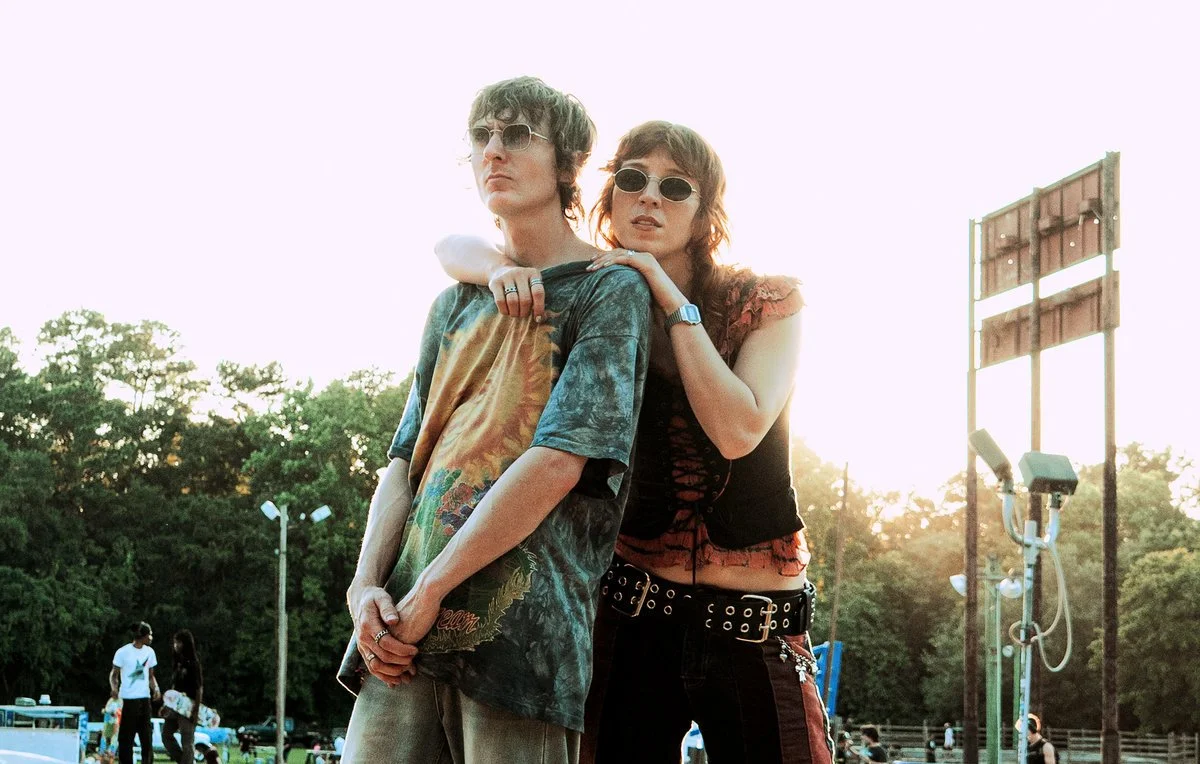
There are few bands in show business as creatively hard-working as Twen. Exemplified by its van-life, the Twen operation is headquarterless, in turns bouncing between places like Florida, St. Louis and New England. Jane Fitzsimmons and Ian Jones first formed the band in Boston. Here, they catch up from St. Louis on a rest amidst their sixty-show, four-leg, six-month Fate Euphoric tour, which spanned November and now February to May, discussing the concepts of fate vs. free will, van life and the spectrum of unpredictability, the books on their reading list and the band’s ambitions.
Bennett Kelly for Look At My Records: I was reading a book about the Talking Heads, and one of their first big tours they did, they tried to play every night for four months, and afterwards, they said, not only were their voices ragged, but they were feeling pretty uninspired.
Jane Fitzsimmons: Oh yeah.
BK: So I was wondering, the way you build it seems like you pace yourselves well, but what are the most challenging aspects of the tours you set up? And the most fulfilling aspects, too?
Jane Fitzsimmons: Well, we love the challenge. I think we're pretty sturdy in the way we have it set up with the van. And with the scheduling, because we get to decide, that circumnavigates some issues that are just inherent in touring.
But, the processing, I view it as mental processing. You meet so many people. You're in so many different places. Sometimes, your reflection or intake, you're experiencing those things, but are you actually processing them? In your body, emotionally, that takes some time, and that's what I'm really thankful for with these little breaks in between each leg that help a little bit. Though I do get a hangover, if you will, for the couple months after a tour ends, where I actually get to understand what happened or memories come back.
BK: How about musically? How do you feel you're playing at the end of a tour? Does that just keep getting better throughout the tour or do you hit a wall there too?
Ian Jones: That's funny. I feel like it always ramps up. The first shows are not as good as the third, fourth, fifth. And then the big middle chunk, the majority of it, is the best, and it keeps getting better and better and tighter and tighter. And then, as you start to get tired, things start to get a little sloppy again. I think only we would notice that sloppiness. I don't think anyone else would. It's like that muscle memory where for the good long while your muscle memory keeps you in a flow state, but then it starts to get a little bit rote and you get tired, and you need a break.
BK: I have both One Stop Shop and now Fate Euphoric on vinyl, so I'm happy about that. I try to connect the albums with your geography a bit. I was seeing One Stop Shop as a Nashville album, even though I think it was written in New Hampshire. And then I see the Infinite Sky EP as like a Florida-slash-road, in-transit album, in between these. And then this one, I think it's also Florida, but it feels like it's evolved musically. It's got some, not entirely, but it's got some faster, punk rock edges. So now I feel like it's moved in that direction in my head a little bit. Does any of that track, and I was wondering, how do you characterize that progression, either musically or geographically?
Ian Jones: I feel like that tracks, that resonates with me. But I would say that all of it is road trip music, and all of it is kind of written with the road and motion in mind. Even when we sit down to write and actually do the thing, it's kind of all informed by our mobile lifestyle.
I definitely think Fate Euphoric has some edge that the other albums don't have. And as for if it has a location base, I'm not sure if I can put my finger on that. Nashville for One Stop Shop, I get it, I get it. It's alright, I don't take offense to you saying that [Jane laughs]. But Fate Euphoric, I don't know what city, if there was a city, it's a good question. To me, it's all f*cking highway music. It's all about the road trip.
Jane Fitzsimmons: Well, I was just thinking of the little chunks of time and place where we were writing or recording. And there was a huge chunk where a lot of those songs were polished off or arranged, or finished start-to-end in St. Augustine, Florida. And on the beach, at a beach house that we were there for about a month and a half. And then we did a lot of recording in New Hampshire. So it has this very New England feeling to it. So those are the two places I associate with it just because I was there doing it, but, there's a lot of in-between as well.
BK: And I think, for Nashville, because One Stop Shop, the first two tracks start with acoustic, and then on this one, I was glad you started the [Philly] show with “Tapdance in Limbo,” because I felt like that would be a perfect show-starter.
Ian Jones: I’m glad you noticed that. I feel the same way. It's kind of a great riff. It's kind of intense, but it's not too moody. It is a nice opening riff to start a show.
Jane Fitzsimmons: It's like an overture.
Ian Jones: Yeah. It's like theme music or something.
BK: Yeah, it got the people moving, too. I'm gonna talk about fate here. So fate is a recurring concept for Twen. Obviously with Fate Euphoric, but even looking back at “Dignitary Life,” where you're singing, ‘You are my kind, our fates are tied, what's yours is mine.’ And then here, you've got a few allusions to fate, like the title track, and the album, and, I think, also in “Tapdance,” you’re singing about fate euphorically. The question is, is it the same theme of “Dignitary Life,” of a collective fate, togetherness? Or have you taken it in a different direction, thematically?
Ian Jones: It's interesting. I've never noticed the fate in “Dignitary Life.” I sing it every night, but I never thought about it in light of Fate Euphoric being about fate.
Jane Fitzsimmons: Oh, I have [laughs].
Ian Jones: I'm sure you have. So is it the continuation of the theme or development of the theme?
Jane Fitzsimmons: Since both of these records were written since we were in the van, and I think being in the van, I hate to say it because it does shape our lives. Here on the road, you know, accidents, coming across things maybe you don't want to, or good things too, it can be the whole spectrum of unpredictability when you're moving around so much. That kind of is in our brains all the time. You have to put yourself… Sometimes I'll wake up in a stir about having a car accident, or something that would harm our band members on the road. But when I'm on the road, that never enters my mind. And it's kind of, where do you put that in your brain, that uncertainty? And that is something that is there for us personally, all the time, for both records. But I think as a collective, I see it echoed back to me, but then I also see it in my own emotional body, the feeling of uncertainty with what's gonna happen in this country and what's gonna happen in the world at large, if it keeps going this way. And so that's where it maybe gets a little bit more collective for me.
BK: I want to ask about “The Center.” In “The Center,” you're quoting the Irish poet W.B. Yeats, his poem “The Second Coming.” And when I was going through the lyrics, I really feel like that poem encapsulates a lot of different lyrics from Twen, and what's going on in the country, with anarchy and how the center cannot hold and things are just going haywire all around. So, I wanted to ask about that. It must be an influential poem for you. Did it come about just for this song, or had it always been a part of your reading program, laying in wait for a lyric?
Jane Fitzsimmons: That is one that completely came subconsciously. I didn't think, ‘Oh, I really want to include this,’ or ‘I've been reading this recently.’ I actually can't remember when I last read that.
Ian Jones: I feel like, well Joan Didion quoted it, did it come from Joan Didion?
Jane Fitzsimmons: I think. I could not tell you. I feel like I have one of those brains. I always made it well, pretty, very well at school, and I'm able to, if it comes up on paper, I'm able to reference it, but I couldn't just tell you casually in conversation. And sometimes it's not always available to me. But luckily, in songwriting, you kind of get into a different state of mind. And “the center cannot hold” came up, and I knew that it was from Yeats, and I liked including it. And I, it’s only somewhat comforting that I am not familiar with the feeling of what it would be like to see, you know, many of my peers, loved ones or family members die in war, or cities I know being bombed. And of course, there's loads of people that are experiencing that in other parts of the world right now. But the kind of society, mentally falling down, or the existential threat and the lack of stability in that regard, the loss of fulfillment or purpose in the systems that be, feels similar, and that's why I think that poem has such parallels.
BK: I mean, when I was going through the lyrics, I was really just struck. I was like, That's the key! That's the key to all of Twen’s lyrics!
Jane Fitzsimmons: [Laughs] Not consciously, but I like that.
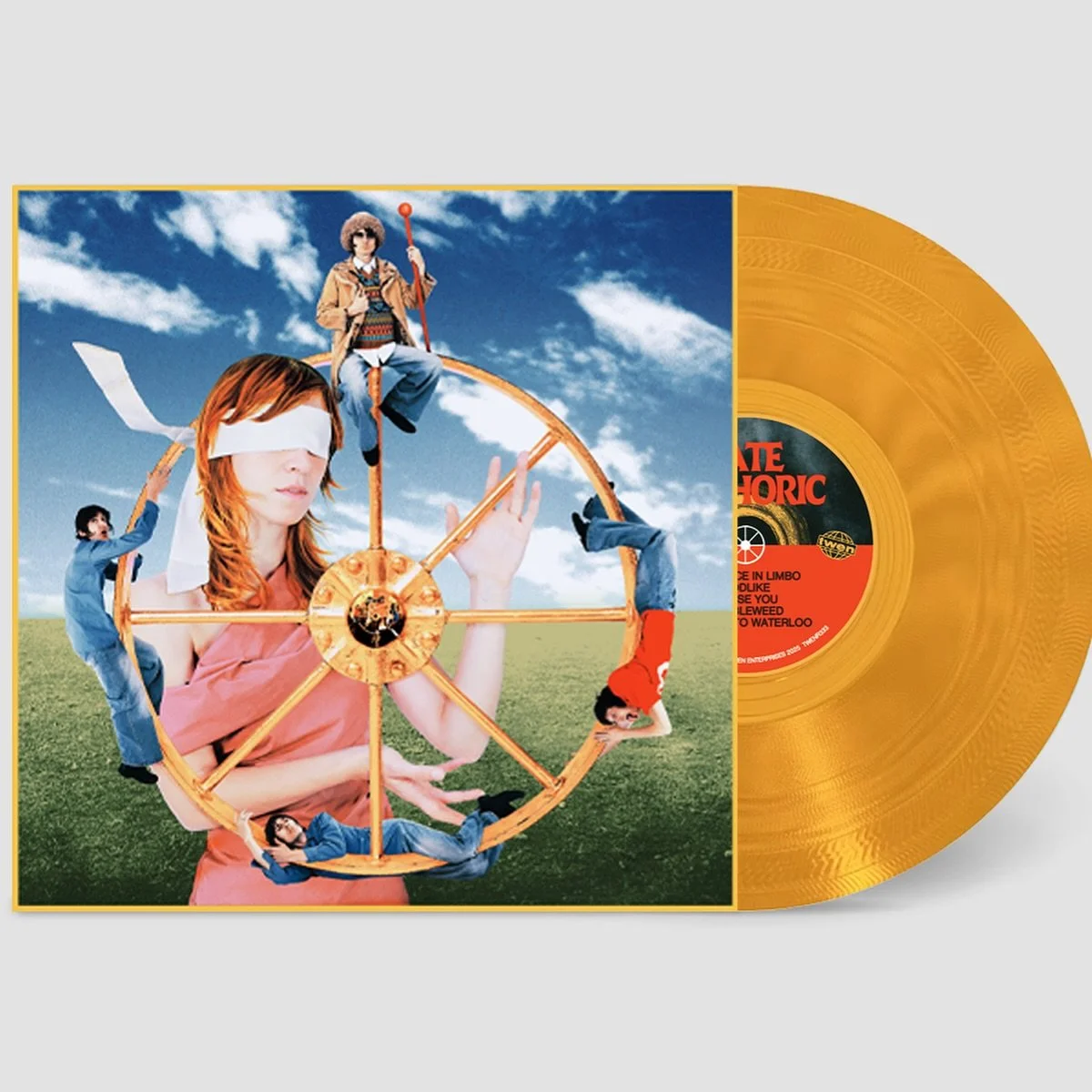
BK: You've also got the quote from Boethius [a 5th-century Roman philosopher] on the inset of the record, you've got Lady Fate as the album art artwork. And you've got “Prelude to Waterloo,” which is a pivotal historical battle for Napoleon. So I was wondering if Twen has a reading list, what would be on it? What would be on the Twen bookshelf? Maybe you've got one in the van, even.
Jane Fitzsimmons: Oh, no, I wish we did. I hate to say we're Kindle people, purely for space reasons.
Ian Jones: Still love a good paperback.
Jane Fitzsimmons: Oh, yeah. Anytime I can, but then I have to leave it immediately once we're done.
Ian Jones: Actually, this is a great question because I feel like the books that would be on our list collectively are so indicative of the music.
Jane Fitzsimmons: Probably.
Ian Jones: So, go, what would be yours? Just think of the great books you've read, about the, what about The Overstory. I have mine.
Jane Fitzsimmons: Oh, that is a great one. The Overstory by Richard Powers. It's a novel, and I find, obviously, love a nonfiction, but novels really enter into your heart and your soul when it’s a story form that's ancient. The Overstory is a great one that combines a lot of different stories that have to do from, climate activists, being up into a tree, and the connection of the forest floor and how forests are sentient in a way, the root systems that we don't really understand in those fungal networks. That one is amazing, and I think that's that kind of interconnectedness I'm about. It really gives you a lot of wonder about the world that we live in, and that you are a part of, though we feel so devoid of it.
Ian Jones: Well, it's almost like microbes and spirituality are the same thing. Like that micro level of the forest floor, the bacteria that is making it all run, is the spirit of the thing.
Jane Fitzsimmons: Yes. Putting out different pheromones and making humans act a certain way.
Ian Jones: All the things that humans can't see in our daily lives, like, that's the sap running through everything.
Jane Fitzsimmons: Yeah. That’s an amazing novel that I’ve read recently.
Ian Jones: And I just read Station Eleven, and that is like twenty years after a worldwide pandemic that wiped out 90% of the population. Up by the Great Lakes, and what that would look like. And that's really interesting because it's a traveling Shakespeare troupe traveling by a horse-drawn carriage, and they go from tiny, little, post-apocalyptic village to post-apocalyptic village, performing Shakespeare. And that's funny, because that's kind of like us, because we're living in our van and we just go from place to place singing our songs. So that's interesting. And then I would maybe do, I would maybe put The Way of Zen on that list, by Alan Watts.
Jane Fitzsimmons: Oh yeah, classic.
Ian Jones: And then what’s one more for you?
Jane Fitzsimmons: At least the most recent, the one I just read is IQ84, which has been around for a while. That's Haruki Murakami, a very renowned Japanese author. And that one’s great because it kind of has parallel universes in it, and this idea of believing in another universe makes it true. And there's some great stuff, there's like cults involved, there's assassins, there's a lot of cool things going on. And a great concept of just the simplicity of if you have love in itself, that if you have someone to love, even if you're not with them, that can sustain you for the rest of your life. And that just shows how powerful love is. That's at the core of that book, but it has a lot of other themes that feel very relevant right now.
Ian Jones: I also just read Things Fall Apart by Chinua Achebe.
BK: Do you have a lot of time to read on the road?
Ian Jones: No, I'm too busy scrolling Instagram. Sucks.
Jane Fitzsimmons: That's one thing that has been our, my New Year's resolution, and I had to get back on it. Because last year, a lot was making the album and you're kind of only creating and marketing and doing all of these things that you want to make exist. It's hard to consume other things. But I got back on it. I highly recommend, if people are not into reading, to get back into it just go to the beach reads, like don't be too big for it. And then slowly, one book at a time, get to the type of literature that you want to be reading, but it'll take, you know, at least six books [laughs]. And then you'll be right back on track.
BK: Let's go back to fate. I was wondering where you fall on the free-will-versus-fate spectrum. Because on the one hand, you've really taken your own fate into your hands, as this fiercely DIY, entrepreneurial band. But on the other hand, how do you reconcile that versus the idea of the fate you’re singing about, which, it's kind of like the opposite of free will, that you embody with how you live.
Jane Fitzsimmons: Totally. They do seem at odds, don’t they? Free will… [laughs] It's always a f*ckin’… it's such a rabbit hole. It seems to be just kind of a mental framework, for a lot of times when sh*tty things happen to us, your mundane or your financial things where you're like, Oh sh*t, this, this might f*ck us over, or something breaks or something bad happens, someone falls ill or whatever. You can always just view it as bad. But I think the worse part is if you get into this framework that the world or the universe is out to get you. And usually, you know, at least up to this point in our lives, those things that have been hard or bad or feel like What's the point of this? have always led to some outcome that we could have never expected, that may lead to good. Whether that's through overcoming them or avoiding some other thing we thought we wanted, and then leading us to something that is better suited to us. And so I think that's just trusting in the universe. And that feels like giving up or being passive, but I think it's more a framework where if you're like, well, this is what I need and want, and I have to have it, and if I don't, then the universe is out to get me. It's this balancing act.
Ian Jones: Yeah, it's more or less just battling with your own ego. The ego wants things, and the ego looks for linear duality.
Jane Fitzsimmons: Like I put in this time, then I should get this.
Ian Jones: Yeah. But as we've gotten older, we’ve realized that blessings and curses are often the same thing. And if you give a blessing time, it could turn into something not so nice. And if you give what you think is a curse some time, it can flower into something really good. So it’s more about being more impartial, and letting things play out. I don't know if that answers the question.
But then the weird thing is once you do that, then it starts to feel like things are just happening to you rather than you doing them. Which is good. I mean, for instance, right now it feels like our band is just growing without us. I mean, it feels like we don't even have to do anything, but we are, obviously. But it's kind of like, well, that's all Tao Te Ching, that's Zen anyway. That's the ‘do all without doing, know all without knowing,’ kind of like effortless mastery, I think they call it.
BK: Okay. Now we're getting places.
Ian Jones: Now we're clicking.
BK: So, all right, good segue, because this second to last question is about ambition, and two lyrics. “Starmaker,” you sing ‘I'll have to make it on my own, I'll be making a star.’ And then “Prelude to Waterloo,” ‘The big swing, we’re taking chances.’ So do you have a place in mind that you want to get to, a certain level? Or is it more just to keep going ‘higher and higher and higher,’ to quote that again, and see where it goes?
Jane Fitzsimmons: I think I definitely need something to work towards. And I find it to be such a gift to be within the framework of the band, because it’s like you're on a track and you just keep going, though there's many ups and downs with that, but you just keep on making music. And the goal may change, or what kind of music you make, but there's always this hope in whatever you're making, of this dream you can put on it. And that is very fulfilling to me, even just the dream of it. And then I just become unattached to the outcome. The dream of making the music is quite enough.
Ian Jones: That's the key. It's great to have ambition, as long as you're not attached to it. If you're playing it like a game, and that your ego will remain intact regardless of whether the ambition comes to fruition or not, then you're good to go. But if you're wrapped up in the outcome of your ambition, then that's a recipe for disappointment and failure.
Jane Fitzsimmons: It feels like if someone wants the benefits of the fame, or power, or wealth or something, of being successful in any field, if you want that without the actual work of it or you don't actually enjoy writing or something, that doesn't really make sense to me. Because the writing part seems to be the thing that is so fulfilling and feels like “chasing,” or that something that you put in the corporate ladder. I need something to be on. I do. My brain does. I need something to work for, and feel like I'm getting better at or mastering. I think everyone does, but especially for me, and to have it in this context of a band is really helpful.
Ian Jones: It's weird because as a band, you're forced to feel… the world conditions you as a musician to feel like your ambitions are more or less gonna look like other bands’ ambitions. I think the hangover from the 20th century of what a successful music star looks like, we're still suffering the hangover from that. And so, I think we've taken initiative to recalibrate our definitions of what success looks like.
To us, the most important thing is the creation of the thing and how deep it cuts with the fans that we do have. It's not about world domination, like it might have been for, you know, a 90s band, for Oasis or whatever, to be the biggest band in the world. Because in my eyes nowadays, that doesn't really mean sh*t. It's like the biggest stars in the world are all backed by these corporate companies that are monopolizing the f*cking industry anyway. So, what is there really to be proud of if you have millions of dollars put behind you and now you're the biggest star in the world? Like who gives a f*ck? I think what's cooler is being the most important band to the fans that you do have, and you actually do it punk rock by doing it yourself without being bankrolled. I think that is our definition of success and we're already living it. So I don't really have ambition other than to continue that.
Jane Fitzsimmons: So it’s maybe like the disillusionment with power in itself. I mean look at the Epstein files, to have so many conspiracies and then actual real things going on with real power, like Michael Jackson and all these musical artists that are in it, it seems weird and crazy at the top.
Ian Jones: Yeah, right. Like, why do I want to go to the top when it's going to be weird and crazy?
Jane Fitzsimmons: I don't know anyone that does these things, you know, and I don't want to.
Ian Jones: We want to keep it real and hold on to our humanity. But we do want to cut to the f*cking bone for our fans. So as long as we can keep doing that, we'll be happy. It's like you're conditioned that as an artist, you're supposed to be on this ladder, rat race of what success looks like, and it's just not f*cking true anymore, you know? So we gotta recalibrate it.
BK: Love it. Alright, last one, and this one is a little different in that you’ll probably want to deflect it to each other. The question is, what is the most “Godlike” element of Twen? And here are your options. The options are: Jane's vocal melodies, Ian and Asher's guitar weaving, or something else entirely, and it could be something metaphysical, not just on stage.
Jane Fitzsimmons: Oh, my goodness gracious. Oh, sh*t… Well, I feel like, if you're going “Godlike,” you're going omnipresent.
Ian Jones: [No hesitation] I would say the chemistry of our vocals together. The harmonies that we create.
Jane Fitzsimmons: I'll accept that, that's great.
Ian Jones: For instance, Twen has so many different songs, and so many different tempos and so many different vibes. We have funny, goofy songs. We have really stoic, epic ballads, like “Long Throat” or “Baptism” or “Godlike.” Or we have feel good rockers, we have all kinds of sh*t. We have acoustic stuff. But the thing that makes it Twen is the blending of our voices, you know? And that is just pure f*cking fate. You know, you just get lucky or you don't with that one, how two voices fit together and the timbre that they create is just, that is the metaphysical part of it.
Jane Fitzsimmons: Definitely.
BK: Nice. Jane, anything to counter with? Any second elements there?
Jane Fitzsimmons: No, no, I like that one.
BK: Alright, cool. Well, that's that's it for the questions, except for one last bonus question, which is about “Starmaker,” which is a simpler question. Which is just, uh, I think this one has a little Britpop feel to me, which I love, and I know with “Automation,” you were messing around with some British, punk and funk stuff. So, is the Britpop thing intentional here, or is that maybe just me? It kind of gives a Blur, rolling, sharp beat song, like Damon Albarn could sing it. Does that make sense at all?
Jane Fitzsimmons: Oh, it makes perfect sense. That is one that is so interesting to me, and it's a puzzle I'll never solve. Because I was obviously familiar with Britpop even before we started writing, but I wouldn't say that was something that we were trying to do. And it is so just what we do. It comes out in a lot of the songs. And I can't really make sense of why, but it does [laughs]. So it's kind of this feedback loop where that was never the intention, and then people are like, it sounds like this, and you're like, yeah, you're kind of right. And then you listen to it more. And then, it probably becomes more so, but none of it is conscious.
BK: Cool. That'll just stay in my head and in my heart, then... I'll keep that one.
Jane Fitzsimmons: We like it.
This interview was edited and condensed for clarity (hardly! Thanks for making it to the end. Over 4k Twen words in digital posterity).
You can purchase Twen’s new album, Fate Euphoric, on vinyl via Bandcamp.
Catch Twen on tour now! For a full list of dates, head to their website.