The Author Speaks: Michael Gilligan on new book “New Jersey Rock: Bands of the ‘80s, ‘90s and ‘00s”
Interview by Bennett Kelly
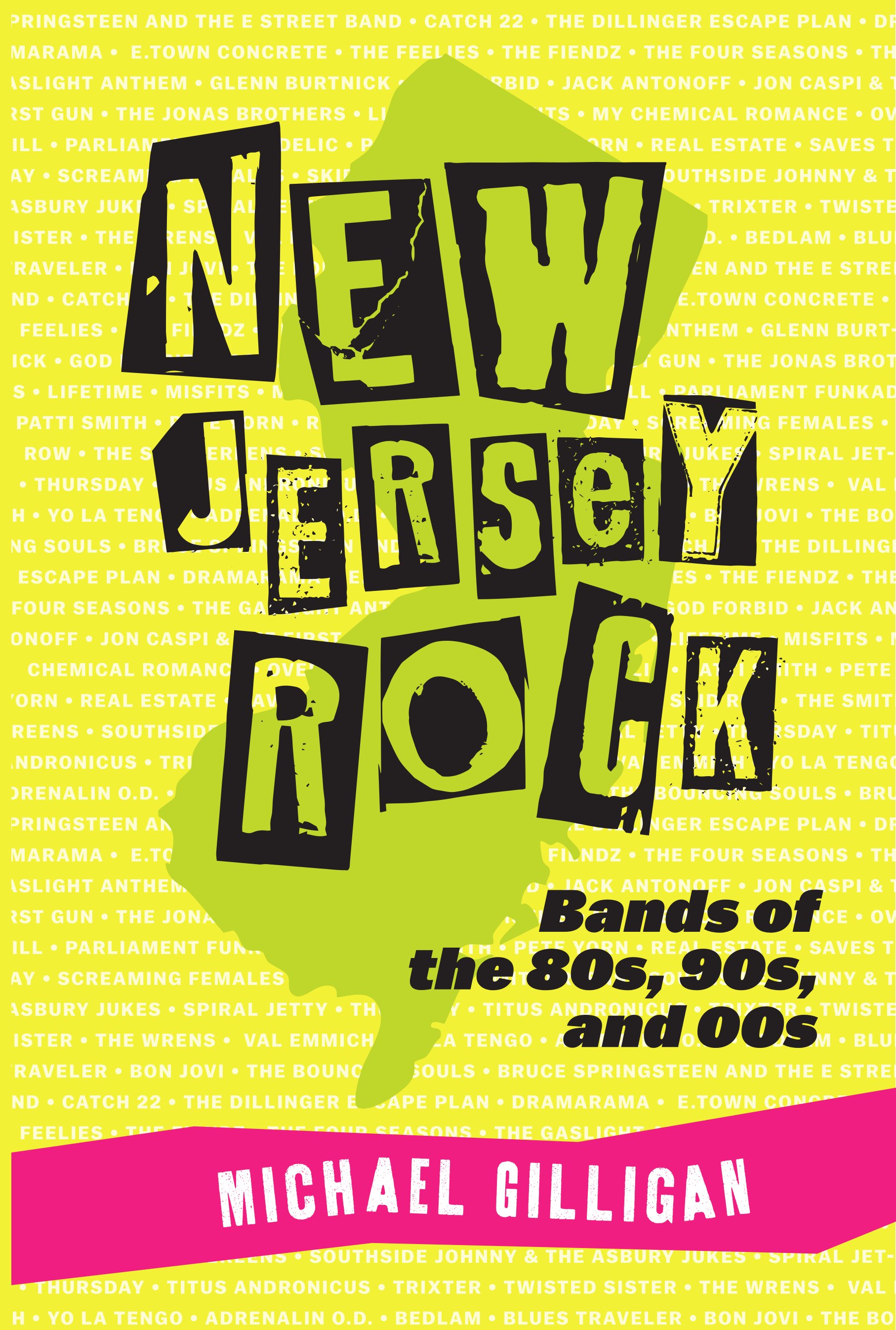
Michael Gilligan is celebrating the thirtieth anniversary this year of his record label Fake Chapter Records with the release of his second book, New Jersey Rock: Bands of the ‘80s, ‘90s and ‘00s, out October 27. The book features band, fan and venue perspectives through original writing and from guest writers from across the state [Editor’s note: including some New Brunswick reporting by interviewer Bennett Kelly]. In a phone interview, Gilligan debates which musical decade was best, chooses which band would get off the bus first, contrasts his time at Sony versus the indies, and considers what he’d do if he could re-live one night from the 90s.
Pretend you are on a debate stage, speaking on behalf of each decade from the book, pitting them against each other. Can you make the case for why each had either the best music, or the best scene, or was otherwise the most fulfilling musical period of the three?
Well, the ‘80s would be the best decade from their point of view for being the MTV decade, with Bruce Springsteen, and Bon Jovi, amongst others. They still are the quintessential New Jersey artists. New Jersey was really in the forefront at the superstar level, and there was just that exciting time with MTV. But then also, the ‘80s was probably the biggest time for New Jersey as far as underground, with the way heavy metal, and hardcore, and different styles of music were forming. So I think New Jersey ‘80s could hang the claim that they were the most diverse decade, and they were also the most interesting decade between the highs of Springsteen and Bon Jovi to the underground.
The ‘90s, I think their claim to fame would be that there were probably the most bands coming up then. With rock, with alternative music, and different mainstream styles of that time that the ‘90s had, it was just like, everybody could be in a band. Everybody was in a band. And your kind of punk revival, your ska, all these different types of music that just had that everybody-should-be-in-a-band vibe. And that's why you have like the basement shows in New Brunswick and all these other kinds of stuff, because it was a great scene of just appreciating rock and wanting to be a part of it.
The 2000s, I think, the argument for them is that that was when New Jersey was maybe the most critical, or most important, rock music of the day. With My Chemical Romance, and Thursday, Saves The Day, Gaslight [Anthem] - all those bands were really national bands. It wasn't just one or two successes, right? You had a whole catalog of bands that were the music of the day that were out of New Jersey.
So, that's how I think all three would shake out.

And then pick which one you think is the best.
I think from my perspective, I'm gonna fall on the ‘90s just because that is my favorite music by decade. When I think about New Jersey, I think about bands like Bouncing Souls, and those are the bands that are gonna come into my head first, before bands like My Chemical Romance or whatever. Even though I recognize that they had bigger success and were probably more important to New Jersey. But that's just how I would gravitate to it, from my personal fanhood.
To use a sports metaphor, in football, the biggest guys get off the bus first, for an intimidation factor. If you had to pick one band to represent the book, represent New Jersey, and it's not Springsteen or Bon Jovi, who would you have step off the bus first to set the tone?
Well, I actually don't talk about them much in the book - just because of the nature of the book, it was hard to go into too much detail about any one particular artist. But I don't think you can pick a more intimidating band than The Misfits. Not only when you think about the punk scene in New Jersey, they’re kind of the equivalent to Bruce when you think of punk from New Jersey. But also, like, the nature of The Misfits... you can’t get more intimidating than those guys walking off the bus.
Yeah, was thinking it had to be them too. In the book, each decade has a Music Facts chapter. Are there any favorites you learned while researching, or any rumors that you couldn’t validate and couldn't include?
Um, if there were any rumors that I couldn't validate, I don't remember. I guess the ones I learned about were, there were a couple that were about the pains of getting a record out. So the two that come to mind that I didn't know about, first was the Dillinger Escape Plan. They basically sold all of their rights for everything just to get the record finished. Obviously, that turned out to be a pretty poor financial decision, but I would understand the mentality where you’re just trying to record a record. And they need money, right? So they're just saying, Okay, to whoever's willing to pay money, like just do what you want.
And then the Rye Coalition. They needed Dave Grohl, which I had no idea that he was a fan of them. And it was funny, when I saw them live, it probably was during this time. They had a record that got shelved by the major label, so it took a guy like Dave Grohl to say, Hey, give it back to them. Let them go. And so those were things that I didn't know, and I was very familiar with those bands, but I was not familiar with how they had to sell their souls to get a record made.
You said the ‘90s were your favorite. So let's say you get to relive one night in the ‘90s, a music-centric all-nighter. What do you do?
Well, I guess what comes to mind is venues. I loved going to Maxwell's [in Hoboken]. Of course, a lot of my Maxwell memories would not be of New Jersey bands, it would be like whoever the band was. But I loved going to Maxwell's. I loved going to the Loop Lounge [in Passaic]. I never lived in New Brunswick, so I only ever made it to like a couple basement shows. But those are really more of the memories that come to mind, because I loved going to concerts at those venues, which are all gone now. Well, I guess basement shows still exist, though I’m sure very differently. But the venues are gone, and even though there's always new venues cropping up, it just wouldn't be the same for me as going to Maxwell’s. So it would be the venues, because I can't go back to those places, right? They're gone.
And then if it's something I haven't done, I actually never went to City Gardens [in Trenton]. It kind of shut down right around the time when I would have been able to drive out there to go to shows. So I always knew about it from bands that played there and the history of it. But I never actually went, so that would be the one that I would go back to if it was like a new experience.
A lot of different venues and music scenes are discussed in the book, but the three that get chapters are the Melody Bar in New Brunswick, and City Gardens, and the Loop Lounge, one for each of the decades. I’m wondering how you whittled it down to those three, because you might have had a tough time cutting out some?
Well, yeah, I mean, because Maxwell's of course would have been one that I was really considering doing. And then, Court Tavern [in New Brunswick] as well. But what it came down to is I tried to think of what venue also kind of represented that time period. So I feel like, you know, City Gardens is a legendary venue for hardcore as well as just the ‘80s underground. And the other club that was considered was the Dirt Club in Bloomfield, because they, also in the 80s, were probably like the highlight from an underground perspective, right? So I really felt like those venues would represent the 80s the best.
From the ‘90s, to me it was between Maxwell's and the Melody, but I felt like Maxwell's was just kind of like… Kind of just important across the decades, but I feel like Melody was, the ‘90s was really a peak with [DJ] Matt Pinfield and all that stuff.
And then the Loop was a little easier of a choice, because of My Chemical Romance and the different connections that it had. I think the thing that sealed it for me was that I saw a tweet where, the singer [Gerard Way] from My Chemical Romance said seeing Thursday at the Loop Lounge was why he started a band. So I think, what other venue could represent the 2000s as well as that, you know?
That was really what I tried to do, even though, obviously, as I pointed out, I could have done the Dirt Club in the ‘80s, or I could have done Maxwell's for the ‘90s. I mean, it wasn't a perfect science, but I just tried to represent the decade the best I could, or the venue I thought represented the decade the best.
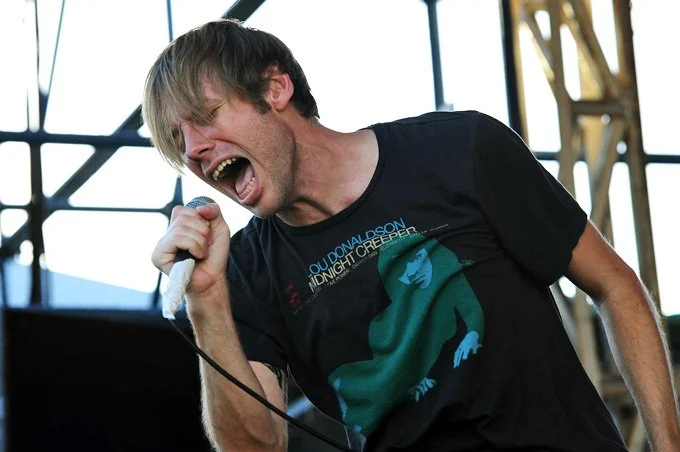
Geoff Rickley of Thursday
You wrote that the idea for this book came from a similar book up in Connecticut [All Known Metal Bands by Dan Nelson, which names 51,000 metal bands from around the world]. I want to know how it went from your idea to the physical book, if you could take me through your road to publication.
Yeah, so I had this idea of just having a book of nothing but names of New Jersey bands. And of all time. And then Fake Chapter turns thirty in a month, so I was thinking of ideas of like, what would be a cool thing to do that would come out around the thirtieth, something different?
And then I was in a bookstore, and I saw the History Press. They do all those regional history books, like if you're in New Brunswick, there'll be at Barnes & Noble the history of New Brunswick, and the neighboring towns, right? So I reached out to them and said, Hey, I have this idea for a book.
And this guy came back to me, he's like, Oh, you know, that's pretty interesting. Um, so what else would be in the book? Just the list of band names? And I'm like, nothing, that's the book [laughs]. And he goes, Alright, yeah, I don't think we're interested. And I'm like, Hold on, hold on. Let me outline what else could be in the book. So then I started thinking of what else could it be. And then it did actually get rejected a couple times, but thankfully, this guy John at History, really did like the idea, so he kept coaching me. Like, well, you know, Maybe we need to focus it in on just rock bands or decades, just kind of refine what the book would be.
And then the next thing I know they were like, Yep, here's the contract, and then to get it out by November [2026], this was like December [2025], to get it out by November [2026], you have to finish in February. Is that a problem? Like, oh, I haven't even started [laughs]. But yeah, sure. So then I was off to the races.
And it's also not your first book, so I was wondering, running a label and being involved with labels, do you prefer being the artist or being the label?
Yeah, I've always been more… I mean, well, let's face it, I've also been well aware for a long time that I'm not capable of being a great artist. So, that probably had something to do with it. But I was also the kid that always cared about that side of it. Like when I was listening to music, I would also be reading the liner notes, and I would care about who the producer was, what record company put it out.
And certainly in the ‘90s when I was coming of age in music, there were so many independent labels around. Matador, and Lookout, and Sub Pop, all these great, American indie labels. So I do feel like I've always gravitated towards the business, and I've always enjoyed that more than what it would be to be an artist. But to be fair, I never seriously tried to become an artist [laughs], so...
Well you are with these books.
I guess so. I mean, I do like the creative side. I guess it boils down to being creative in any way, you know? And I guess I enjoy the creative process, and just because I do feel like I'm a music fan, a music collector. I have thousands of CDs, thousands of records. I do feel like I'm that first. Just a music lover first and then the company and the creative side of it is just the next step of that love, you know?
A question about your first book, which was Sex, Drugs, and Cubicles: What I've Learned from the Music Industry [2014]. I was wondering, I guess you were working at Sony while running Fake Chapter and at another NJ label. So I was wondering, if you have any examples or anecdotes of the discrepancy of working at a “have” versus a “have-not.” How did that all fit in your psyche? Was it all just one thing, or would you work at Sony and then go work at Fake Chapter and laugh about some of the differences?
Yeah, I mean, one of the reasons why I wrote that book was that I left the industry. I left Sony after twelve years or so, and I was unemployed, and I knew that my next job was going to be outside of the music industry. My next day job. So, I can kind of write that book because I did feel like it was the end of an era for myself, personally, of kind of having that dual life of working from a corporate perspective, of a record label during the day, and then doing it to my uh, creative satisfaction by doing the indie label at night.
And I think that the industry still back then, I guess probably the difference was, is that as much as the internet and digital was really changing music, Sony still was a very traditional record company type structure, the times I worked there. And, you know, that was changing rapidly, and I knew that I was going to want to be in a different industry as a day job.
So I think the big difference now would be, is that the record labels now don't have that traditional structure. Fake Chapter, because it's small, because it's indie, we still kind of hold on to that traditional structure. When I say that, I mean how you approach a record, how you work with artists. That kind of stuff. Although we have to adapt, you know, we're not looking at it from like the TikTok-impression point of view. Just different measuring sticks that, like, obviously, a major record capable company today would have to be measuring things by.
Oh, that's interesting, that the traditional labels maybe do things less traditionally now than the indies. That makes a lot of sense. Also makes it more attractive in a lot of ways to be with an indie.
Yeah I mean, it changes, but I'm sure from an artist perspective, it's the same. It's the same give and pull, right? Like if you're with an indie, you have more freedom, you probably maybe have more, you know, credibility. You certainly are probably closer to being a pure artist than you would be with the influence of a record label.
But then you don't have the… even though as much as there's a level playing field, sometimes with digital and streaming and all that, you still don't have the backing, you still don't have the power that they would have to really break through and stuff like that. So I feel like it's the same, the details may have changed, but it’s still the same conundrum from the hardness of choosing indie versus major, pros and cons and it's hard to say what is really truly the right choice.
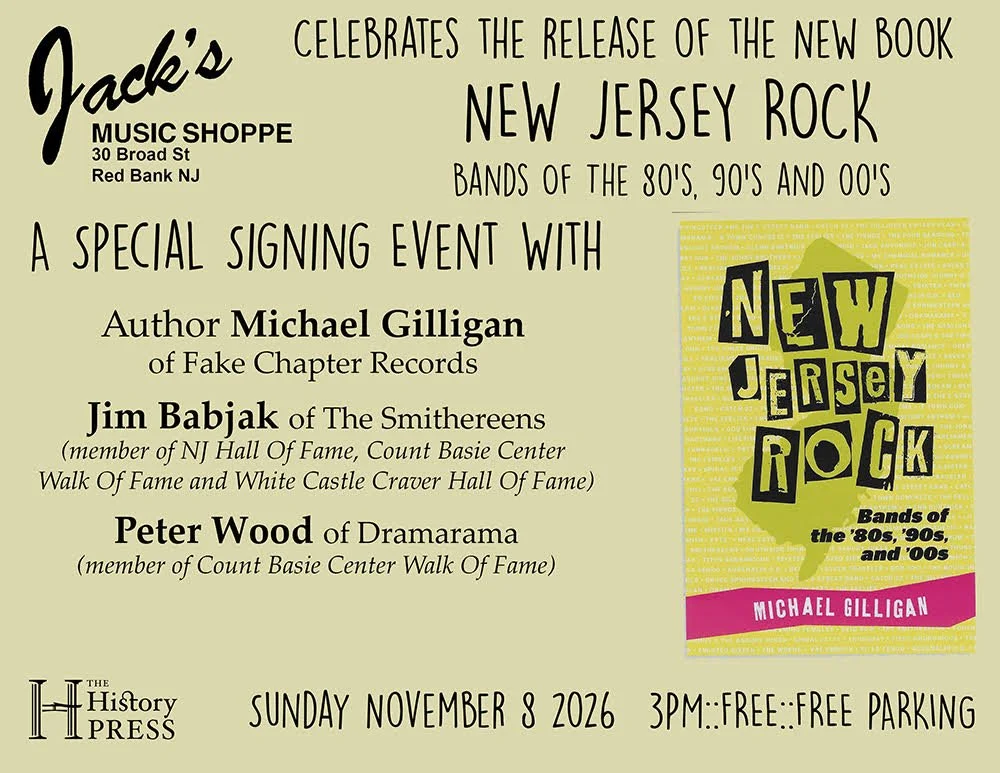
Fake Chapter Records was founded in Maywood, NJ in 1996 by Michael Gilligan. New Jersey Rock: Bands of the ‘80s, ‘90s and ‘00s was released on October 27, 2026. Books can be purchased online or at events including at Jack’s Music Shoppe in Red Bank, NJ, on Sunday, November 8, where the author will be joined at his signing by Jim Babjak of The Smithereens and Peter Wood of Dramarama.